

Calculators
All values are interpreted in inches. Enter values as decimals or fractions (e.g., 2.5 or 2 1/2 = 2 1/2"). Do not include units in the input. Feet, yards, and other units are not used. All results are returned in inches.
Wooden Planter Compound Angle Calculator
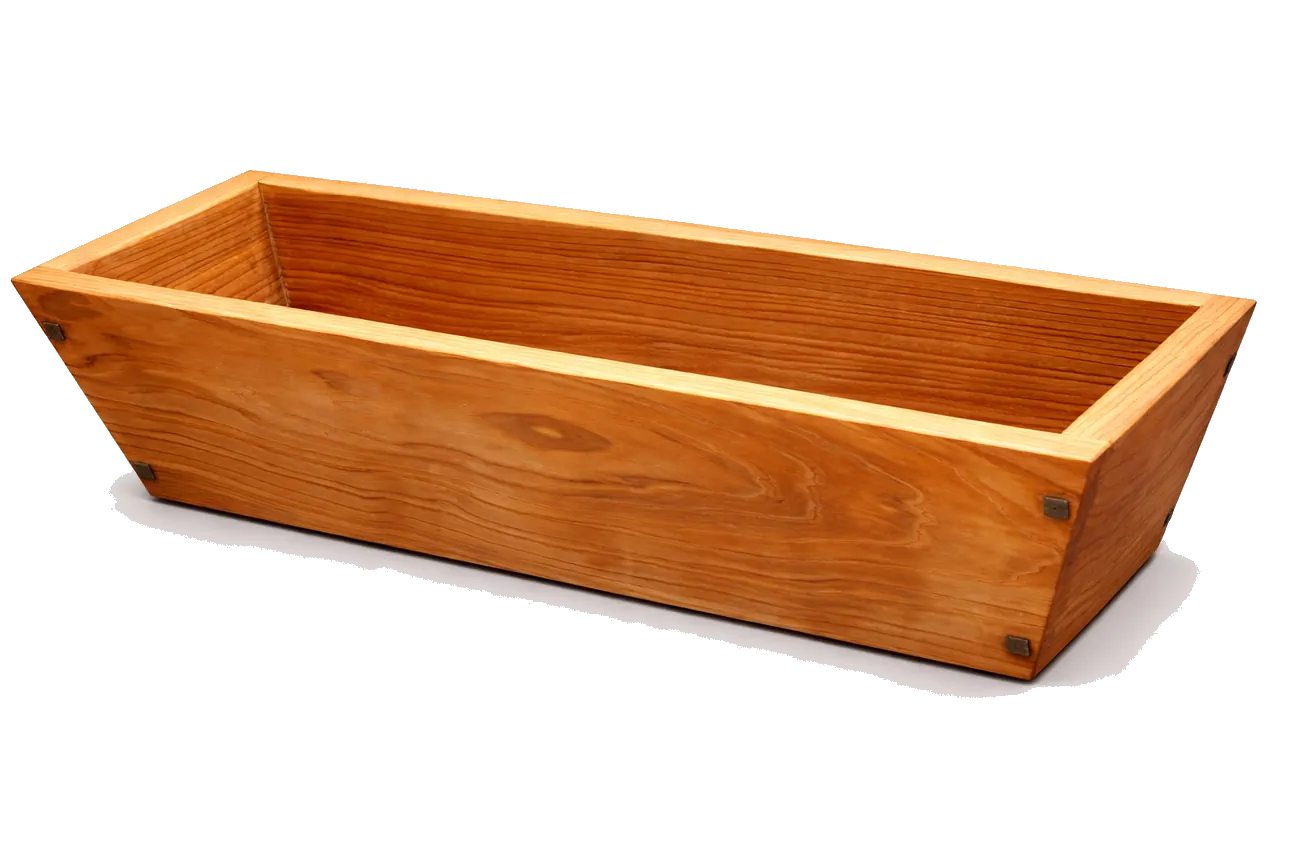
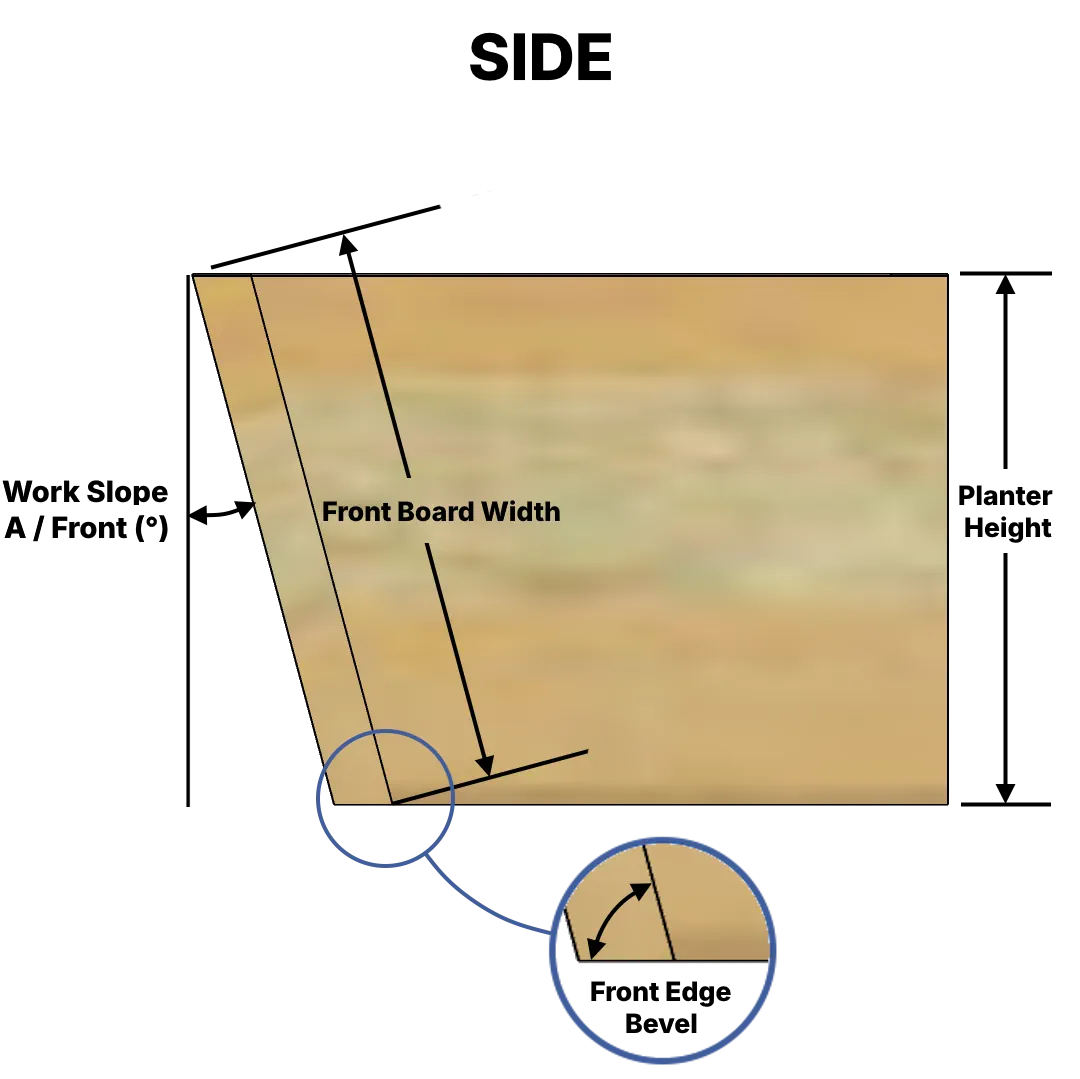
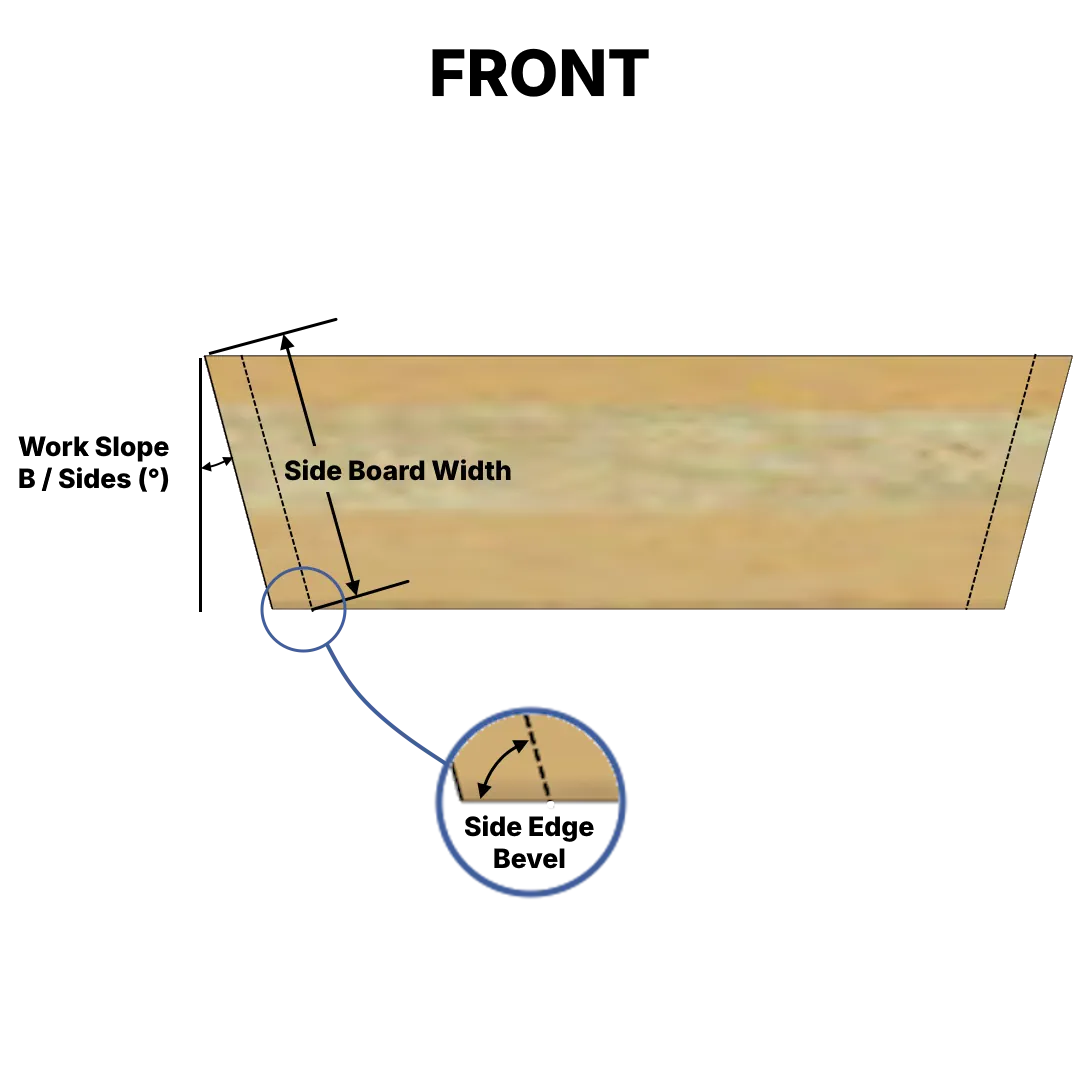
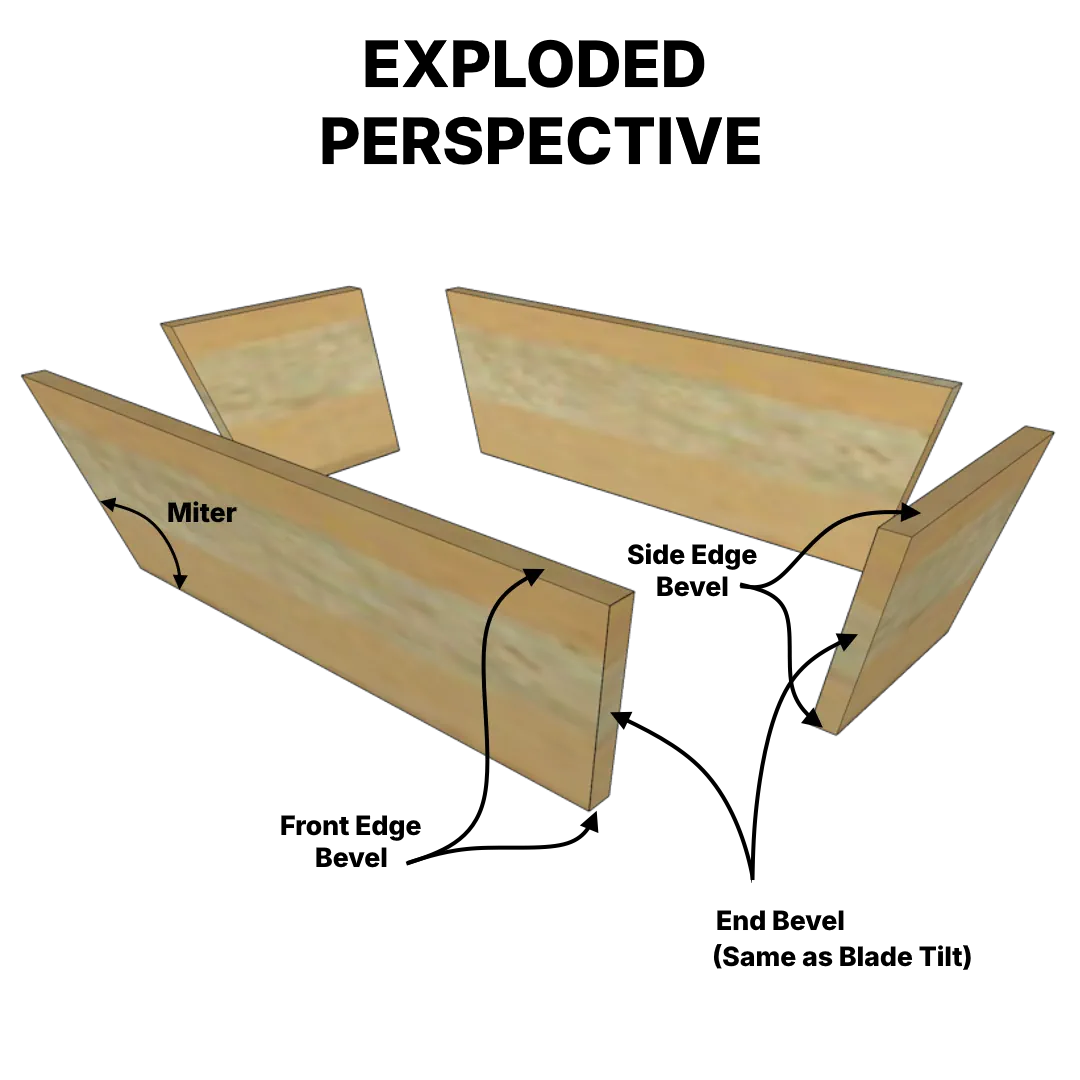
Enter the front slope, side slope, planter height, and board thickness. If only one slope is entered, both faces use the same slope. If board thickness is left blank, the calculator assumes 3/4 in. or 19 mm. Results give table saw blade tilt, miter gauge setups, edge bevels, and board widths.
Blade Tilt (off 90°):
ⓘ
The
amount the saw blade
is tilted away from
90° for the compound
end cuts.
-
Blade Setting (90 - Tilt):
ⓘ
The
blade angle as read
directly on the saw,
equal to 90° minus
the blade
tilt.
-
Miter Gauge Setup / Front:
ⓘ
The
miter gauge setting
used when cutting
the ends of the
front boards.
-
Miter Gauge Setup / Sides:
ⓘ
The
miter gauge setting
used when cutting
the ends of the side
boards.
-
Front Edge Bevel:
ⓘ
The
bevel angle cut on
the long edges of
the front boards so
the assembled
planter sits
flat.
-
Side Edge Bevel:
ⓘ
The
bevel angle cut on
the long edges of
the side boards so
the assembled
planter sits
flat.
-
Front Board Width:
ⓘ
The
overall width of the
front board,
measured tip to tip
across the beveled
long edges.
-
Side Board Width:
ⓘ
The
overall width of the
side boards,
measured tip to tip
across the beveled
long edges.
-
Segmented Bowl Ring Calculator

Provide any three of the four primary values (wall thickness, stock thickness, wall slope, or ring spacing), and the calculator will solve for the missing value. This allows you to work from known or desired dimensions and determine the remaining geometry of a segmented bowl ring.
These two fields are optional. Enter either bowl height or ring count to calculate the other using the stock thickness. Only one of these fields needs to be filled in.
Wall
Thickness:
-
Stock
Thickness:
-
Wall
Slope:
-
Ring
Spacing:
-
Bowl
Height:
-
Ring
Count:
-
SUPPORT US
If you enjoyed the article and want to ensure we make more on other topics, you can support us by purchasing Nick's books and project plans at the Workshop Companion Shopify Store. And — as always — thank you for your kind attention.

Back to Top